A VIN lookup starts with the 17-character vehicle identification number stamped on a car or printed on its paperwork. New York registers vehicles through the state Department of Motor Vehicles, and title, plate, and registration records sit with that agency rather than a Monroe County office. Decoding a VIN reveals the make, model year, plant, and body style before a purchase.
Rochester buyers, insurers, and fleet managers use a VIN search to compare a listing against state records. No countywide counter issues VIN reports, so plan on the state DMV website or a mailed request for official paperwork. Sellers should hand over the number willingly. Treat any third-party history report as a lead, then verify the details that matter with the state agency.
VIN Search Methods
A VIN search begins with the number itself, typed without spaces or punctuation. Some tools accept a license plate or a title number for a cross-check, yet the VIN remains the reliable key. Free decoders return basic specifications; state records cover title and registration. Compare both before you trust a listing. Choose the method that matches what you need to confirm, and keep a screenshot of each result.
Enter 17-Digit VIN
Type all 17 characters exactly as they appear on the door jamb, the dashboard, or the registration. Letters I, O, and Q never appear in a VIN, so a result showing them signals a typing error. Watch for a 0 mistaken for O and a 1 mistaken for I. Recheck the entry before you submit, since one wrong character returns a different vehicle or no result. Have a second person read the number aloud.
Validate VIN Format
Format checks look at length, allowed characters, and the check digit in position nine. A decoder flags an entry that fails those tests before it queries a database. Not every manufacturer follows the check-digit formula, so a warning is not proof of a fake number. Compare the number against two physical locations on the car. A mismatch between them deserves a closer look. Save the decode result with your inspection notes.
Required Search Details
Most lookups need only the VIN. Some state forms ask for the plate, the title number, the registered owner’s name, or a mailing address so staff can match the request. Photo identification may be required for a title search. Confirm the current form and fee with the state DMV before you mail anything. Keep copies of every submission and the reply. Ask the agency to confirm receipt before the deadline passes.
VIN Structure & Decoding
Each VIN divides into three parts: a manufacturer code, a descriptor block, and an identifier block. Reading them in order explains why two similar cars carry different numbers. A decoder maps those characters to specifications, yet the mapping depends on the maker’s own tables. Some positions carry meaning only for certain brands. Compare the decoded output with the physical vehicle before you rely on it.
World Manufacturer Identifier
The first three characters form the world manufacturer identifier, or WMI. They name the builder and often the country of assembly. A single maker can hold several WMIs for trucks, imports, or joint ventures. Decoders list the code and a country, and the country field is a strong clue when a seller describes a vehicle as domestic. Verify the plate and paperwork against that code.
Vehicle Descriptor Section
Characters four through eight make up the vehicle descriptor section. This block typically carries the model, body style, engine family, and restraint details. Makers vary the layout, so the same position can mean different things across brands. Decoders rely on manufacturer tables for this block. When a listing claims a trim level, compare it with the descriptor output and the window sticker if one is available.
Vehicle Identifier Section
The vehicle identifier section runs from position ten to the end of the number. It holds the model year code, the plant code, and a production sequence that sets one car apart from another. Two vehicles built on the same line share most characters but differ in the sequence. That final stretch is what makes a VIN lookup useful for identity, not just specification. Read the last six characters twice.
Model Year & Plant Codes
Position ten encodes the model year with a letter or digit, and position eleven names the assembly plant. Those two characters help a buyer spot a vehicle advertised as a newer model than its paperwork supports. The year code repeats on a cycle, so an older car can share a letter with a recent one. Read the full number and the title together. Ask the seller which year appears on the title.
Vehicle Specifications
A decoded VIN returns specifications that a listing often omits: engine displacement, fuel type, drive layout, and trim. Use those fields to check an advertisement before a long drive to see the car. Specification data describes how the vehicle left the factory, not how it sits today. Aftermarket changes, swaps, and repairs do not appear in the decode. Confirm anything mechanical in person. Bring a flashlight for the engine bay.
Make, Model & Year
The make, model, and model year form the base of any vehicle record. Decoders usually return a marketing name and a series or trim code, and the two can differ from the seller’s description. A model year is not the same as a build date or a first-sale date. Compare all three fields with the title, the registration, and the door sticker before you agree on a price.
Body & Drive Type
Body style and drive type appear in the descriptor block for most manufacturers. A coupe, sedan, wagon, or pickup carries a different code, and all-wheel drive may sit in a separate position. These details matter for insurance quotes and parts orders. Verify them against the vehicle itself, since a rebodied or repaired car can carry a VIN from another shell. Compare the door sticker with the VIN plate.
Engine & Transmission Details
Engine family, displacement, and transmission type often decode from the VIN, though coverage varies by maker. Some brands encode an engine family alone, leaving the exact variant to the build sheet. Transmission codes appear less often. Use the decoded data to confirm what a seller claims, then check the engine bay and the service records. A swapped engine changes the picture without changing the VIN.
Vehicle History & Title Records
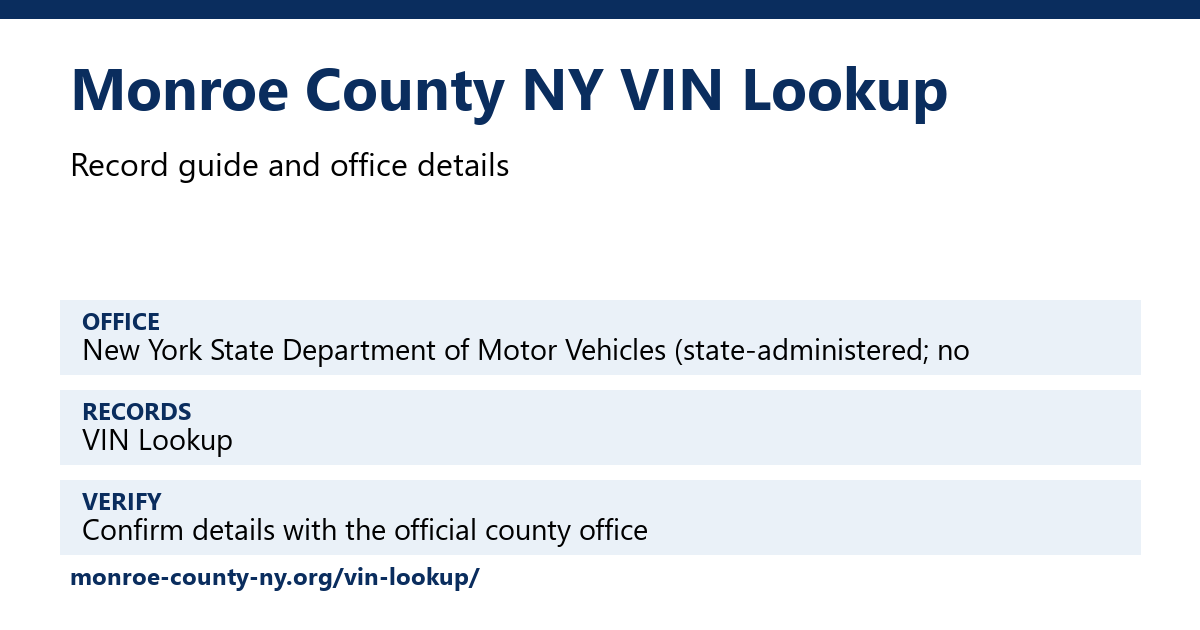
History and title data come from state agencies, insurers, and inspection programs, and each source updates on its own timetable. New York holds title and registration records; monroe county ny records do not issue a consolidated report. Expect gaps for vehicles that moved between states or sat unused. A clean report describes what was reported, not everything that happened. Order the state record for the fields that carry legal weight.
Rochester, NY 14614
Rochester, NY 14614
Registration & Ownership History
Registration history shows where a vehicle was titled and when a new owner took it over. New York issues titles through the state DMV, and a title search normally requires a form, a fee, and proof of identity. Owner names are not always released. Ask what the agency will provide before you file. A gap in the chain deserves an explanation from the seller. Bring the plate number to the counter.
Accident & Damage Records
Accident and damage entries reach a history report through insurance claims, police records, and salvage auctions. Not every repair generates a record, and a minor scrape often leaves no trace. Paint meter readings, panel gaps, and frame measurements tell a buyer more than a database line. Treat a clean accident history as one input, then inspect the car or pay for an inspection. Ask for photographs of the damaged area.
Salvage & Rebuilt Title Status
A salvage title means an insurer declared the vehicle a total loss. A rebuilt title shows that a state later approved it for road use after repairs. New York marks these brands on the title document, and the brand follows the car between states in most cases. A branded title lowers value and can affect insurance. Read the brand before you negotiate. Request the repair invoices too.
Active Recalls & Theft Logs
Manufacturers publish safety recalls by VIN, and a dealer can confirm whether a remedy was completed. Theft entries appear in state and national crime databases, and a recovered vehicle may still carry a clean title. Check recalls directly with the maker, then ask about outstanding repairs. A theft log search usually requires the VIN and, in some programs, a fee or an account. Write the recall number on your service file.
Record Accuracy & Resolution
Errors creep into vehicle data through clerical entry, out-of-state transfers, and lagging updates. A wrong digit in a title record can follow a car for years. Correcting one usually means filing with the state agency that holds the record, not with a website that displays it. Gather the title, the registration, and photographs of the VIN plates before you request a fix. Keep a dated folder for each correction.
Invalid VIN Format Errors
An invalid format message most often means a typo, an extra space, or a letter that cannot appear in a VIN. Recheck positions nine and ten, where a check digit and a year code sit. Older vehicles and some imported or kit-built cars use shorter numbers that fail modern validation. If the plate and the paperwork disagree, ask the state DMV how to proceed. Type the number into a plain text file first.
History Update Delays
Title work, lien releases, and out-of-state transfers take time to reach a public database. A sale completed last week may not show for several weeks. Lien holders add another step. Bring the bill of sale and the signed title to any transaction, and do not treat a stale report as proof of a clean record. Confirm the current status with the state agency. Call the agency if the wait runs long.
Conflicting Database Details
Two sources can disagree about mileage, color, or owner count. One may carry data from an insurance claim that another never received. Record which source you used and the date of the entry. Ask the seller for documentation that explains the conflict. When a discrepancy involves a title brand or a lien, resolve it with the state before money changes hands. Ask the seller which report they used.
Frequently Asked Questions
These answers address the questions Rochester drivers ask about a VIN lookup. Vehicle identity, title, and registration services in New York run through the state Department of Motor Vehicles, and no Monroe County office issues a countywide VIN report. Service hours and contact options change, so check the state DMV site or call before a visit. Nothing here replaces an official record. Bring a photo ID for counter service.
Where is the VIN located on a vehicle?
Look at the lower corner of the windshield on the driver’s side, where a small plate shows the number through the glass. The driver’s door jamb carries a certification label with the same VIN. Find it under the hood on the firewall or on the engine block for older cars. Compare two locations to confirm the plates match before a purchase. Wipe the glass before you read it.
Are all VINs exactly 17 characters?
Modern vehicles built for the United States market use a 17-character VIN, and that structure is what most decoders expect. Older cars, motorcycles, and some imported or home-built vehicles carry shorter numbers. A decoder may reject those entries even when the number is correct. Provide the full number and check the paperwork when a short VIN fails. Count the characters twice before you conclude that a plate is wrong.
How quickly do title updates appear online?
Timing varies with the workload at the state agency and with the type of transaction. A dealer sale, a lien release, and an out-of-state transfer each follow a different path. Ask the office handling your paperwork for an expected turnaround instead of relying on a general estimate. Keep the dated receipt, and follow up if the record still shows the prior owner. Keep the receipt until the new title arrives.
Why does a valid VIN show no history?
A valid number can return an empty report when the vehicle is new, was registered in another state, or sat off the road for years. A fresh import or a rebuilt car may have little recorded activity. Some agencies withhold owner details by policy. Absence of history is not proof of a problem, and it is not proof of a clean record either. Ask the agency to search by plate as a cross-check.